
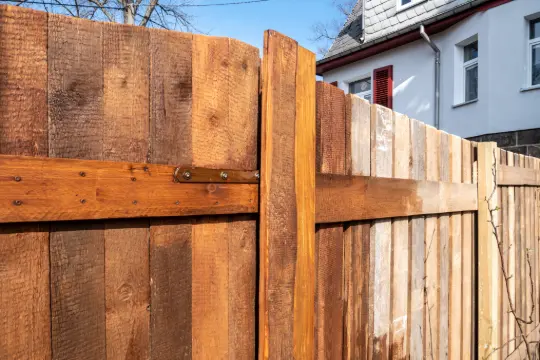
A North Texas fence can look perfectly fine in spring and noticeably more weathered by the end of summer. That is why fence staining deserves a spot on the seasonal maintenance list before the hottest part of the year arrives.
Wood fences around Prosper, Celina, and Little Elm face an awkward combination of intense sunlight, long stretches of heat, sudden thunderstorms, wind, and humidity. One week may be dry and bright; the next may bring a fast-moving storm that soaks the wood before temperatures climb again.
That repeated cycle can pull moisture into the boards, dry them back out, and gradually leave the fence faded, rough, cracked, or warped. Staining does not make wood indestructible, but it can give the surface a valuable layer of protection while helping the fence look better at the same time.
If your backyard fence has begun to turn gray or feel dry to the touch, early summer is a good time to take a closer look.
What North Texas Summer Does to Wood Fences
The peak summer months in the Dallas–Fort Worth area are typically sunny, humid, and consistently hot. Daytime temperatures commonly reach the 90s and can climb to 100 degrees or higher, while brief afternoon or evening storms may interrupt otherwise dry stretches.
The National Weather Service’s Dallas–Fort Worth climate overview offers a helpful picture of the conditions outdoor wood faces each summer. Those conditions matter because fences do not get the same protection as many other parts of a home.
A fence is exposed from the top, front, back, and sides. Its boards absorb sunlight for hours, catch wind-driven rain, and sit close to soil, irrigation, grass, and landscaping. Depending on how the yard is oriented, one side may bake in direct afternoon sun while the other stays shaded and damp.
Sunlight gradually changes the appearance of unprotected wood. Rich cedar or warm brown tones can fade toward silver or gray. That weathered look is not automatically a structural emergency, but it often shows that the surface is losing protection.
Heat and dry conditions can also remove moisture from the wood. As boards dry, they may shrink, develop small cracks, or become rough. Fasteners can loosen, and gaps between pickets may grow more noticeable.
Then a storm arrives. Wood absorbs moisture, swells, and begins another drying cycle once the sun returns. Over time, repeated expansion and contraction can lead to splitting, cupping, warping, and other visible movement.
Good summer fence maintenance is about slowing that cycle before small cosmetic issues become larger repairs.
How Fence Staining Protects Your Fence
The main purpose of fence staining is to help reduce the amount of punishment the wood absorbs directly from the weather.
A quality stain penetrates or coats the wood, depending on the product. It can help limit moisture absorption while adding pigments that reduce the effects of sunlight. The stain also refreshes the fence’s color, making the yard look cleaner and more finished.
That protection matters because water does not always damage a fence in one dramatic event. More often, moisture enters gradually through exposed grain, small cracks, cut ends, and weathered surfaces.
Once moisture gets into the wood, the fence may swell, soften, or become more vulnerable to mildew and decay. A stain cannot solve drainage problems or repair rotten lumber, but it can help reduce future exposure when applied to sound, properly prepared boards.
Pigmented stains are especially useful for wood fence protection because the color helps screen the surface from ultraviolet light. In general, more pigment means more visual coverage and stronger protection from fading, although it also hides more of the natural grain.
The best finish depends on the look you want, the fence’s age, its previous coating, and how much sun it receives. A newer cedar fence may look great with a transparent or semi-transparent product, while an older, uneven fence may benefit from a more opaque finish.
The important part is matching the product to the actual fence rather than choosing based only on a color sample.
Signs Your Fence Needs Stain
A fence does not need to be falling apart before it deserves attention. In fact, staining usually provides the most value when the wood is still in reasonably good condition.
 Walk the full fence line instead of judging it from the patio. Pay special attention to the top edges, post bases, areas near sprinklers, and sides that receive strong afternoon sun.
Three common warning signs are:
- The wood looks gray, faded, blotchy, or noticeably lighter than it once did.
- Water soaks into the boards instead of beading on the surface.
- Boards feel dry or rough and show small cracks, raised grain, or minor warping.
You may also notice that the fence looks darker near the ground or behind shrubs. That can point to moisture exposure, poor airflow, or irrigation repeatedly hitting the boards.
Loose pickets and unstable posts should be repaired before fence staining begins. Stain can improve appearance and protection, but it cannot correct movement or restore damaged wood.
The same applies to rot. Soft, crumbling, or deeply damaged boards typically need replacement rather than another coat of finish.
Homeowners in Prosper often have relatively new privacy fences that may still look attractive but are beginning to lose their original color. Treating the wood before heavy weathering sets in can help preserve that newer appearance.
In Little Elm, yards near open areas or water may experience different wind and moisture patterns. That makes it especially useful to inspect both sides of the fence instead of focusing only on the side visible from the house.
Should You Stain a New Fence Right Away?
A new fence is not always ready for stain the day it is installed.
Fresh lumber may contain too much moisture for a finish to absorb or bond properly. Pressure-treated wood, in particular, often needs time to dry. Cedar may be ready sooner, but the actual timing depends on weather, storage, installation conditions, and the boards themselves.
A simple water test can offer a clue. Sprinkle a small amount of water onto several areas. If it beads and remains on top, the wood may not be ready. If it absorbs into the boards, the fence may be dry enough for further evaluation.
That test is only a starting point. A professional may also use a moisture meter to check whether the wood is within the product manufacturer’s acceptable range.
Waiting too long creates a different problem. Unprotected lumber begins weathering as soon as it is installed. The surface may gray, collect dirt, and develop uneven absorption that requires more preparation later.
The goal is not to stain a fence immediately or wait for an arbitrary number of weeks. It is to apply the finish once the wood is properly dry and prepared.
Best Weather Conditions for Fence Staining
Good timing can make the difference between a smooth, even finish and a frustrating result.
Most stains perform best within a specific temperature and humidity range. Those limits vary by product, so the label and technical instructions should guide the schedule.
In North Texas, fence work is often easier during a stretch of moderate, dry weather before the harshest summer heat arrives. Early mornings can be useful, but the boards must be free from dew and surface moisture. Starting at sunrise simply because the temperature is lower is not always the right move. The fence may still be damp, especially on shaded sides or near landscaping.
Direct afternoon sunlight can create the opposite issue. A hot board may cause stain to dry before it penetrates or levels evenly. That can leave lap marks, shiny spots, dark patches, or inconsistent color.
Wind also matters. A breezy day may feel comfortable, but strong wind can carry dust and debris onto wet stain. It can also create overspray concerns when products are being applied with spray equipment. Rain should stay out of the forecast long enough for the fence to dry before application and for the stain to begin curing afterward. Because summer storms can develop quickly, local planning matters.
A good fence staining schedule may involve working on one side while it is shaded, then moving as the sun changes position. It may also mean postponing the project when the weather is technically dry but simply too hot for good results.
Why Cleaning and Preparation Matter
Staining over dirt does not protect the wood. It protects the dirt.
Before a finish is applied, the fence may need to be cleaned to remove dust, mildew, algae, old residue, and the gray surface fibers created by weathering. The cleaning method should be strong enough to prepare the wood without tearing it apart. Aggressive pressure washing can leave gouges or raised fibers, especially on softer wood. Holding the nozzle too close may create stripes that remain visible after staining.
After cleaning, the fence needs time to dry thoroughly. Shaded areas, end grain, joints, and the bottom portions of boards may hold moisture longer than open surfaces. Minor sanding may be necessary where fibers have lifted or rough areas could affect the finish. Damaged pickets should be replaced, loose fasteners secured, and plants trimmed back enough to allow access.
Preparation also protects the rest of the property. Nearby siding, windows, patios, pools, landscaping, outdoor furniture, and neighboring property may need to be covered or moved before application begins.
Professional fence painting and staining services typically devote a meaningful part of the project to these steps because the final result depends on what happens before the first coat goes on.
How Summer Storms Affect Wood Fence Protection
North Texas summer rain can be brief, heavy, and wind-driven. A storm may soak one side of the fence while leaving protected areas relatively dry.
Strong winds can also loosen boards, damage gates, and bring down branches. The Texas Department of Insurance notes that high winds can damage fences and recommends documenting storm damage before repairs when an insurance claim may be involved. Its Texas storm-damage guidance is a useful resource after severe weather.
After a storm, do not rush to apply stain just because the next day is sunny. The surface may appear dry while the interior of the wood still contains too much moisture. Give the fence enough time to dry, then inspect it for movement and damage. Check posts, rails, pickets, gates, and fasteners before treating the surface.
Staining is preventive maintenance, not storm repair. Structural problems should be corrected first so that the finished fence is both attractive and secure.
DIY Fence Staining vs. Professional Results
A homeowner can stain a fence, especially if it is small, easy to access, and in good condition. The challenge is that the project is usually larger than it appears.
A standard privacy fence has two faces, narrow edges, posts, rails, corners, gates, and areas close to the ground. It may also sit against flower beds, pools, sheds, neighboring fences, or other surfaces that need protection.
DIY work often takes several weekends once cleaning, drying, repairs, masking, application, and cleanup are included. Weather delays can stretch the timeline further.
Application technique matters too. Spraying can cover broad areas efficiently, but it still requires control, back-brushing where appropriate, and careful protection against overspray. Brushing or rolling gives more control but can be slow and physically demanding.
Uneven preparation may cause the stain to absorb differently from one board to the next. Overapplication can leave sticky or shiny areas, while thin coverage may provide less protection than expected.
Professional fence staining brings experience with product selection, weather timing, preparation, application, and property protection. A trained crew can also recognize when a fence needs repairs or additional drying time before work proceeds.
The value is not just avoiding a long weekend in the heat. It is improving the likelihood that the finish looks consistent and performs as intended.
How PaintMor Painters Helps Protect Outdoor Spaces
PaintMor Painters works with homeowners across North Texas who want to refresh and protect weathered wood fences without guessing about preparation, stain selection, or timing.
The process begins with looking at the existing fence. Its age, wood type, previous finish, sun exposure, moisture patterns, and overall condition all influence the recommended approach. A fence in Prosper may need a different plan from one in Celina or Little Elm. Newer construction, mature landscaping, sprinkler placement, open exposure, and neighboring properties can all affect how the wood weathers.
PaintMor Painters can help determine whether the fence is ready for treatment, which repairs should happen first, and what finish will complement the home and landscaping. Homeowners in Celina can also use a fence refresh to bring a more finished look to newer outdoor spaces. A consistent stain color can visually tie together the fence, patio, lawn, and home exterior.
The goal is not simply to make the wood darker. It is to create a clean, even finish while helping the fence stand up better to North Texas conditions.
Is It Too Late to Stain Once Summer Arrives?
Not necessarily. Fence work can still be completed during summer, but scheduling becomes more important as temperatures climb. Work may need to begin earlier, follow the shade, and pause during extreme heat or unpredictable weather.
If the fence is already gray or dry, waiting through another full summer may allow more weathering to occur. On the other hand, rushing into poor conditions can produce disappointing results. The best next step is an inspection. Find out whether the wood is dry, sound, and ready. From there, the project can be scheduled around the fence rather than forced into an arbitrary date.
Homeowners considering professional fence staining can contact PaintMor Painters to discuss the condition of their fence and request an estimate.
Protect the Fence Before the Heat Does More Damage
A wood fence is a major part of the backyard, even when it fades into the background of everyday life. It provides privacy, affects curb appeal, and helps define the spaces where families relax and entertain.
North Texas heat, sunlight, moisture, and storms gradually wear that fence down. Fence staining helps slow the process by adding color and protection before the wood becomes severely weathered.
The best results begin with honest evaluation. Check the boards. Look for fading, roughness, cracks, movement, and moisture exposure. Repair what is damaged, allow the wood to dry, and choose a finish suited to the fence and its environment.
Done at the right time and with proper preparation, staining can help a fence look better through summer while supporting a longer, more useful life.